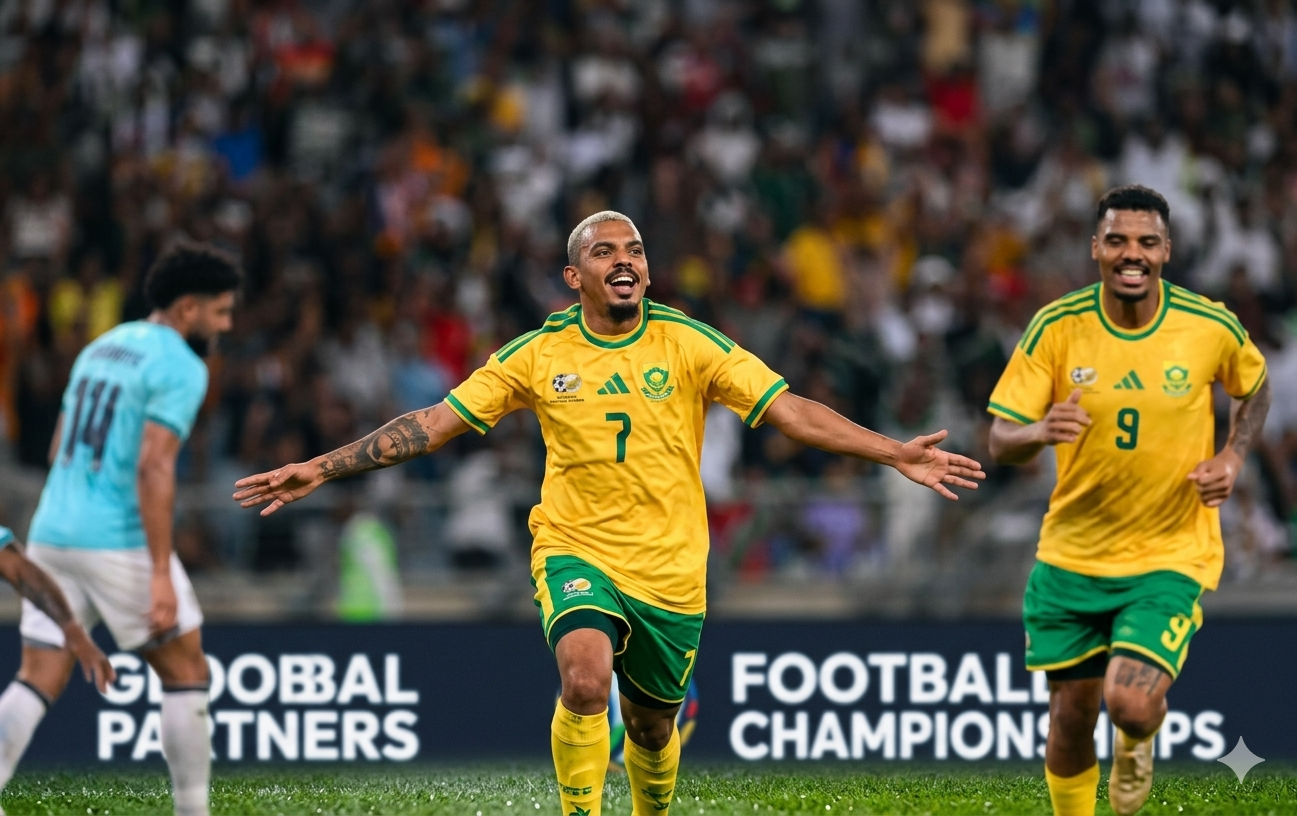
Football is often described as a game of fine margins, a sport where the distance between a historic victory and a frustrating stalemate is measured in millimeters. For South Africa’s national team, Bafana Bafana, their recent international outing served as a painful reminder of this reality. Despite a moment of individual brilliance from rising star Oswin Appollis, Hugo Broos’s men were left reflecting on what might have been as they failed to secure a maximum points haul, leaving fans and pundits alike questioning the team’s clinical edge in front of goal.
The Weight of Expectation
Heading into the match, the atmosphere surrounding Bafana Bafana was one of cautious optimism. Following their impressive podium finish at the last Africa Cup of Nations (AFCON), the expectations on the South African national team have shifted. No longer are they seen merely as participants; they are now viewed as a continental powerhouse expected to dominate, especially when playing on home soil or against lower-ranked opposition.
The tactical setup under Hugo Broos has remained relatively consistent. The Belgian tactician has instilled a philosophy built on defensive solidity and quick transitions. However, the recurring Achilles’ heel for this squad has been the conversion rate. While the buildup play is often fluid and aesthetically pleasing, the final touch—the “killer instinct”—frequently goes missing when it matters most.
A Bright Start and the Appollis Breakthrough
From the opening whistle, South Africa looked like a team with a point to prove. The midfield, anchored by the tireless Teboho Mokoena, controlled the tempo of the game. The movement off the ball was sharp, stretching the opposition’s defensive lines and creating pockets of space for the wingers to exploit.
It didn’t take long for the pressure to pay off. In a sequence that showcased the technical quality inherent in the squad, Oswin Appollis found himself in the right place at the right time.
The Goal Moment: Receiving a crisp pass on the edge of the area, Appollis showed remarkable composure. With a deft touch to set himself, he unleashed a strike that left the goalkeeper rooted to the spot. The stadium erupted, and for a moment, it felt as though Bafana Bafana were on the verge of a dominant performance.
Appollis, who has been making waves in the domestic league, proved why he is considered one of the brightest talents in South African football. His ability to find space between the lines and his confidence to take on defenders provided a much-needed spark.
The Turning Point: A Catalog of Missed Opportunities
In football, a 1-0 lead is often the most dangerous scoreline. It provides a sense of security that can quickly turn into complacency. After the opening goal, Bafana Bafana had several clear-cut opportunities to double their lead and effectively kill off the contest.
1. The One-on-One Nightmare
Early in the second half, a defensive lapse from the opposition gifted South Africa a golden opportunity. A perfectly timed through-ball put the striker one-on-one with the keeper. With the entire goal to aim for, the shot was dragged wide of the post. It was a glaring miss that seemed to shift the momentum of the game.
2. Woodwork Woes
Minutes later, a powerful header from a set-piece rattled the crossbar. The rebound fell kindly to a South African shirt, but the follow-up effort was blocked by a desperate sliding tackle. The “if only” moments began to pile up, creating a sense of anxiety both on the pitch and in the stands.
3. Lack of Final Ball Precision
While the statistics will show a high number of “shots on goal,” many of these were speculative efforts from distance. The real issue lay in the final ball. Several promising counter-attacks fizzled out because of a heavy touch or a poorly timed pass, allowing the opposition to recover and reset their defensive shape.
The Tactical Stalemate
As the clock ticked down, the opposition grew in confidence. Seeing that South Africa had failed to put the game to bed, they began to commit more players forward. Hugo Broos attempted to steady the ship with a series of substitutions, bringing on fresh legs to maintain the high-press.
However, the rhythm of the game had changed. The fluid passing that defined the first half was replaced by hurried clearances and tactical fouls. The midfield, once dominant, began to lose individual duels, and the pressure on the Bafana Bafana backline became palpable.
| Statistic | Bafana Bafana | Opposition |
| Possession | 58% | 42% |
| Total Shots | 16 | 7 |
| Shots on Target | 5 | 3 |
| Big Chances Created | 4 | 1 |
| Corner Kicks | 8 | 2 |
The table above illustrates the story of the match: dominance in possession and shot volume, but a failure to translate that into a comfortable scoreline.
The Equalizer: A Bitter Pill to Swallow
The inevitable happened in the closing stages of the match. A momentary lapse in concentration at the back—perhaps fueled by the fatigue of chasing a second goal—allowed the opposition to find an equalizer. A cross from the flank wasn’t properly cleared, and the resulting scramble in the box saw the ball poked into the net.
The silence that fell over the stadium was deafening. After controlling the vast majority of the game, Bafana Bafana found themselves level. The final few minutes were a frantic affair, with South Africa throwing everyone forward in a desperate attempt to reclaim the lead, but the opposition held firm, parking the bus and clearing their lines with urgency.
Analysis: Why Can’t Bafana Bafana Finish?
The post-match analysis has centered on one major theme: clinical finishing. This isn’t a new problem for the national team, but it is one that Hugo Broos must address if South Africa is to compete with the elite of world football.
The Psychological Barrier
There is an argument to be made that the pressure of playing for the national team weighs heavily on the strikers. When a player misses a “sitter,” it often leads to a crisis of confidence that affects their decision-making for the rest of the match. Instead of playing instinctively, players begin to overthink their shots.
Over-reliance on Midfield Scoring
While it is great to have goal-scoring midfielders like Appollis and Mokoena, a top-tier team needs a dedicated “Number 9” who lives and breathes goals. The current squad often lacks a focal point in the box—a striker who can turn a half-chance into a goal through sheer physicality or predatory instinct.
Tactical Rigidity
Some critics argue that Broos’s system, while defensively sound, doesn’t provide enough support for the lone striker. When the wingers are forced to drop deep to help with defensive duties, the striker often finds themselves isolated against two or three central defenders.
Looking Ahead: The Path to Redemption
Despite the disappointment of the draw, there are positives to take away. The performance of Oswin Appollis proves that there is a deep pool of talent coming through the ranks. His goal was a masterclass in technique and should serve as a blueprint for the rest of the attacking unit.
However, the “missed chances” narrative must be flipped. South Africa cannot afford to drop points in games they dominate if they want to ensure easy qualification for upcoming major tournaments.
Key Areas for Improvement:
-
Composure in the Box: Dedicated finishing drills during training camps are essential to build muscle memory and confidence.
-
Game Management: Learning how to “close out” a game at 1-0, whether through tactical substitutions or by simply retaining possession to frustrate the opponent.
-
Squad Depth: Broos may need to look at experimental strike pairings in upcoming friendlies to find a more potent attacking combination.
The Fans’ Perspective: Patience or Frustration?
The South African football public is notoriously passionate. On social media, the reaction to the draw was a mix of pride in the team’s style of play and deep frustration at the result. Fans are tired of the “we played well but didn’t win” narrative. They want to see a Bafana Bafana team that is ruthless—a team that strikes fear into opponents not just with their skill, but with their efficiency.
As the team prepares for their next round of fixtures, the pressure will be on. The ghost of missed chances continues to haunt the squad, and only a string of convincing, high-scoring victories will be enough to exorcise those demons.
Deixe um comentário