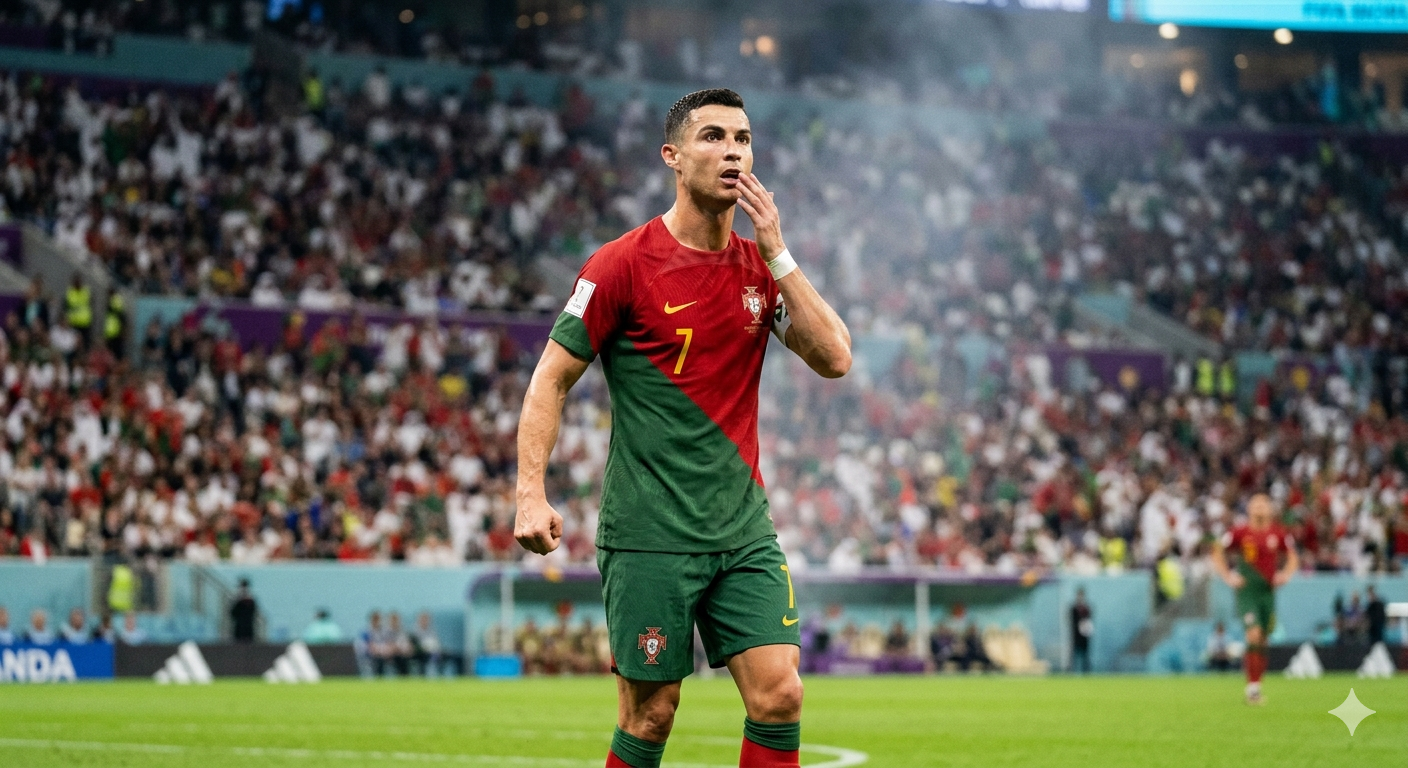
In the grand theater of professional football, few narratives are as compelling as the final chapter of a generational icon. As the world prepares for the next FIFA World Cup in 2026, the spotlight intensity has shifted toward a single figure whose career has redefined the limits of human performance and sporting ambition. Cristiano Ronaldo, the man who transformed Portugal from a team of talented underachievers into European champions, is embarking on his “Last Dance.” This is not just a tournament; it is a final quest for the only trophy that has eluded his grasp—the World Cup.
The significance of this journey cannot be overstated. For over two decades, Ronaldo has been a constant in the global footballing consciousness. From the teenage prodigy at Sporting CP to the dominant “CR7” of Manchester United, Real Madrid, Juventus, and now his veteran leadership role, he has accumulated five Ballon d’Or awards and five UEFA Champions League titles. Yet, the World Cup remains the final frontier, the “unfinished business” that haunts the legacy of even the greatest players.
The Psychology of the Final Mission
To understand why this World Cup is different for Ronaldo, one must delve into the psychology of an elite athlete facing the twilight of their career. For Ronaldo, motivation has never been about money or fame; it is about an almost pathological obsession with being the best.
In this final quest, Ronaldo is battling more than just opposing defenders; he is battling time itself. At 41 years old, an age where most players have transitioned into coaching or punditry, Ronaldo remains a physical marvel. However, the mental load of this “Last Dance” is immense. He knows that every sprint, every leap, and every free-kick could be his last on the world stage. This sense of finality creates a high-pressure environment where every moment is magnified. For Portugal, this means their captain is playing with a level of focus that could either galvanize the squad or create a heavy burden of expectation.
The Evolution of Portugal’s Golden Generation
One of the most fascinating aspects of Ronaldo’s final quest is the team surrounding him. Unlike the Portugal squads of the mid-2000s, which were often criticized for over-reliance on Ronaldo, the current “Seleção das Quinas” is arguably the most talented in the nation’s history.
With stars like Bernardo Silva, Bruno Fernandes, Rafael Leão, and Ruben Dias, Portugal is no longer a “one-man show.” This evolution has changed Ronaldo’s role within the team. He is no longer required to carry the ball from the halfway line or create every attacking opportunity. Instead, he has evolved into the ultimate “Fox in the Box,” a clinical finisher who relies on the creative genius of his teammates. This synergy between the veteran leader and the young superstars is the key to Portugal’s success. The “Last Dance” is a collective effort, where the young guns are determined to send their idol out on the highest possible note.
Tactical Adaptation: The CR7 of 2026
From a tactical perspective, Ronaldo’s final quest requires a different approach. The explosive winger of the 2000s has been replaced by a positional master. Ronaldo’s greatest strength in his later years is his “footballing IQ”—his ability to read the game and occupy spaces where he can be most effective with minimal effort.
Under the guidance of Roberto Martínez, Portugal has developed a system that maximizes Ronaldo’s presence without compromising the team’s defensive integrity. By using high-pressing midfielders to win the ball back quickly, Portugal ensures that Ronaldo spends more time in the final third, where his heading ability and clinical finishing remain world-class. This tactical balance is what makes Portugal a genuine contender. They have learned to play with Ronaldo, rather than just for him.
The Shadow of the Rivalry: Messi vs. Ronaldo
It is impossible to discuss Ronaldo’s final World Cup without mentioning the shadow of Lionel Messi. With Messi’s 2022 triumph in Qatar, the “GOAT” (Greatest of All Time) debate took a definitive turn in many eyes. For Ronaldo, this creates an even deeper layer of motivation.
Winning the World Cup would not just be about the trophy; it would be about parity. It would be the final piece of the puzzle that allows his supporters to argue his supremacy on equal footing. This rivalry, which has fueled both players for twenty years, reaches its climax in this final cycle. While Ronaldo publicly plays down the comparison, the drive to match his rival’s ultimate achievement is a powerful undercurrent in his final quest.
The Global Impact: A World Watching in Awe
Ronaldo’s last World Cup is a global cultural event. From the streets of Madeira to the fan zones in Tokyo and New York, the world is preparing to say goodbye to a legend. His impact transcends football; he is a brand, a fitness icon, and a symbol of what can be achieved through sheer work ethic.
The economic and social impact of his final appearance is staggering. Television ratings, merchandise sales, and social media engagement will reach record highs as fans scramble to witness the final chapters of CR7. For the FIFA World Cup itself, Ronaldo’s presence ensures a level of prestige and drama that only a few athletes in history—perhaps only Pele or Maradona—have ever commanded.
The Physical Battle: Fighting the Biological Clock
The most impressive part of Ronaldo’s final quest is his physical condition. His dedication to recovery, nutrition, and training is legendary. In this final cycle, he is utilizing cutting-edge sports science to ensure his body can withstand the rigors of a short, high-intensity tournament in the North American heat.
However, the World Cup is unforgiving. The recovery time between matches is minimal, and the physical toll on a veteran player is significant. Ronaldo’s ability to manage his energy levels across a month-long tournament will be the deciding factor in his performance. The world is watching to see if the most disciplined athlete in history can truly defeat the aging process for one last month of glory.
The Legacy of 2016: The Blueprint for Success
Portugal’s Euro 2016 victory provides the blueprint for Ronaldo’s final quest. That tournament proved that Portugal doesn’t need to play the most attractive football to win; they need to be the most resilient. Ronaldo’s leadership from the sidelines after his injury in the 2016 final remains one of the most iconic moments in sports history.
In this “Last Dance,” Ronaldo’s role as a motivator is just as important as his role as a goalscorer. He is the guardian of the team’s mental strength. If Portugal finds themselves in a difficult knockout match, it is Ronaldo’s experience and “never-say-die” attitude that will prevent a collapse. He has been through the fire before, and he knows exactly what it takes to win a major international trophy against the odds.
Facing the Critics: The Motivation of Doubt
Throughout his career, Ronaldo has thrived on doubt. Every time critics have claimed he is “finished” or “past his prime,” he has responded with a hat-trick or a record-breaking performance. This final quest is no different.
There are many who believe that his age and his move to Al-Nassr in Saudi Arabia diminished his ability to compete at the very highest level. Ronaldo is well aware of these narratives. He enters the World Cup with a point to prove. His “Last Dance” is fueled by the desire to silence the critics one last time. For Ronaldo, there is no greater fuel than someone telling him he can’t do something.
The Emotional Weight: A Nation’s Hope
For the people of Portugal, Ronaldo is more than a footballer; he is a national hero who put their country back on the sporting map. The emotional weight of this final quest is felt deeply across the nation.
Families will gather to watch, knowing that they are witnessing the end of an era. The “Last Dance” is a period of collective nostalgia and hope. For a small nation that has always punched above its weight, Ronaldo is the ultimate symbol of Portuguese Valentia (courage). The dream of seeing him lift the trophy in his final act is a powerful unifying force in Portuguese society.
Beyond the Pitch: The Final Leadership Test
Cristiano’s leadership style has often been polarizing. In the past, his frustration on the pitch was seen as detrimental to younger players. However, in this final quest, we are seeing a more “statesman-like” Ronaldo.
He has embraced the role of the “elder statesman,” often seen mentoring the younger wingers and encouraging the defensive line. This maturity is vital. A successful World Cup run requires a squad that is unified, and Ronaldo’s ability to put the team’s success above his individual ego will be his greatest leadership test. If he succeeds, it will be a testament to his growth as a human being, not just an athlete.
The Statistics: Chasing Immortality
As he enters the tournament, the numbers are already in his favor. He is the all-time leading goalscorer in international football, but he wants to push that record into a territory that will never be reached again.
Every goal he scores in this World Cup will be a new record. He is chasing the record for most World Cup tournaments with at least one goal, and he aims to become the oldest goalscorer in the competition’s history. These milestones are not just trivia; they are the markers of a career defined by sustained excellence.
Conclusion: The Final Whistle Awaits
As the curtain rises on Cristiano Ronaldo’s final quest for World Cup glory, the footballing world holds its breath. We are witnessing the end of a legendary era, a “Last Dance” that encompasses two decades of excellence, rivalry, and drama.
Whether he lifts the trophy or exits in tears, Ronaldo’s legacy is already secure. He has redefined what it means to be a professional athlete. However, the allure of the World Cup remains the ultimate siren song. This final mission is the culmination of a lifetime of work, a final attempt to achieve the impossible.
We should not just watch Ronaldo in this tournament; we should appreciate him. We are unlikely to see another player with his specific combination of talent, discipline, and longevity for a very long time. The “Last Dance” is a celebration of a career that changed the game forever. As the final whistle approaches, Cristiano Ronaldo remains what he has always been: a man on a mission, a legend in pursuit of immortality.
Deixe um comentário